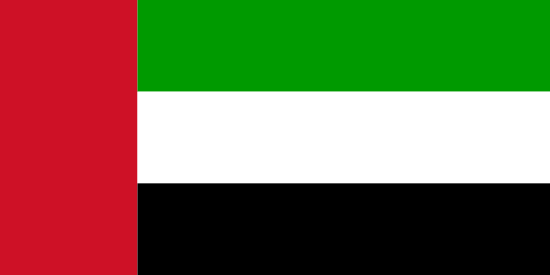
In the UAE, Foreign Ownership is regulated by Federal Decree-Law No. 32/2021, on Commercial Companies (UAE Companies Law) Article 71. This new law allowed 100% foreign ownership in most sectors and overturned the previous Federal Law No. 8 of 1984, Article 22 which required 51% Emirati ownership that limited managerial control and ownership certainty for non-Emirati investors. Most entrepreneurs will now be able to open new companies while owning it entirely without a local sponsor. This has helped bring in more FDI into the country and strengthen investor confidence in the UAE’s legal framework. In this article, we will examine the legal framework governing foreign ownership in the UAE, while focusing on the recent ownership liberalization, its implementation across mainland and free zones, and its implications for foreign investors.
Under Federal Decree-Law No. 32 of 2021, foreign investors are now allowed to hold 100% ownership in companies across most business activities, which made a major change across the UAE’s corporate legal structure. The new law has simplified the process for establishing branches, enabling international companies to enter the UAE market with less procedural complexity. Investors are now able to choose business activities that fall within the Ministry of Economy approved Positive List, which include agriculture, manufacturing, logistics, and other economic activities. In total, there are 122 activities currently classified under the Positive List which allow foreign investors to benefit from full ownership in these areas. However, certain activities remain excluded from this liberalization. These sectors are classified as “Activities with Strategic Impact or Negative List”, and the requirement of 51% UAE national ownership continues to apply here. Each emirate has the power to decide on what activities they can permit for full foreign ownership. The economic department of the emirate determines the list. So certain emirates will require UAE national for an activity whereas the other emirate will not. This helps each emirate to focus on its local economic priorities.
In the UAE, freezones had already been operating under a 100% foreign ownership economic model before the mainland had started it for most activities. These zones were established as separate economic jurisdictions with the aim of providing simplified corporate service procedures, favorable tax treatment, streamlined regulatory requirements, facilities favorable for specific industries and full ownership with no need of a local sponsor. The recent change bought by Federal Decree-Law No. 32 of 2021 reduced the competitive advantage that freezones had over the mainland. This change in the UAE federal law created a more uniform investment structure across the whole country. However, investors do still choose free zones as they offer a more liberalized and flexible investment environment without tax.
Prior to the introduction of the new law, foreign investors had to start with a UAE national who owned 51% of the company’s shares. They had to prepare and enter into side agreements with their Emirati partners to maintain their control over the company’s operations, decision making and management. While side agreements are accepted by courts in the UAE in certain situations as supporting evidence, there were some legal challenges that had to be dealt with. Under Articles 394 and 395 of Federal Law No. (5) of 1985, when people use sham contracts to hide a real agreement and when a contract is only made to look real on the outside, creditors and successors who act in good faith can rely on what appears in the sham contract or hidden real contract, and they are allowed to prove that the contract was fake in any way if it harms them. If the parties had relied on the apparent contract while others relied on the hidden one, the law protects those who relied on the apparent contract. While the legal framework guided businesses, it mostly depended on mutual trust between the parties.
Since the implementation of the ownership reforms in which foreign investors were able to hold full ownership in most activities, the need for local sponsors has reduced. This also reduced the need for drafting side agreements, thus providing foreign investors with greater legal strength, operational control, and confidence in the UAE’s corporate framework. The reforms have eased business setup, branch establishment, and enhanced the transparency and credibility of companies, making it easier for investors to secure financing and expand their operations. As a result, these reforms have not only encouraged higher levels of foreign direct investment but have also placed the UAE among the top countries in the world for FDI inflows strengthening the UAE’s position as a leading global business hub. All of this was facilitated by the implementation of the new ownership framework, which shows how regulatory reform can directly drive investment and economic growth. With a diverse and investor friendly environment, the UAE now serves as a model for other countries seeking to attract international investment while promoting sustainable economic development.
References:
Federal Decree-Law No. 32/2021, On Commercial Companies (UAE Companies Law) Article 71
Law No. 8 of 1984 on Commercial Companies (as amended up to Federal Law No. 15 of October 25, 1998)
https://uaeahead.com/uae-commercial-companies-law-guide/
Federal Decree-Law No. 32/2021, Article 71
https://www.nortonrosefulbright.com/en/knowledge/publications/e2d9f6ed/uae-issues-permitted-list-with-regards-to-the-foreign-direct-investment-law
https://www.meydanfz.ae/blog/benefits-of-free-zones-dubai
Federal Law No. (5) of 1985 concerning the issuance of the civil transactions law of the United Arab Emirates, Articles 394 & 395